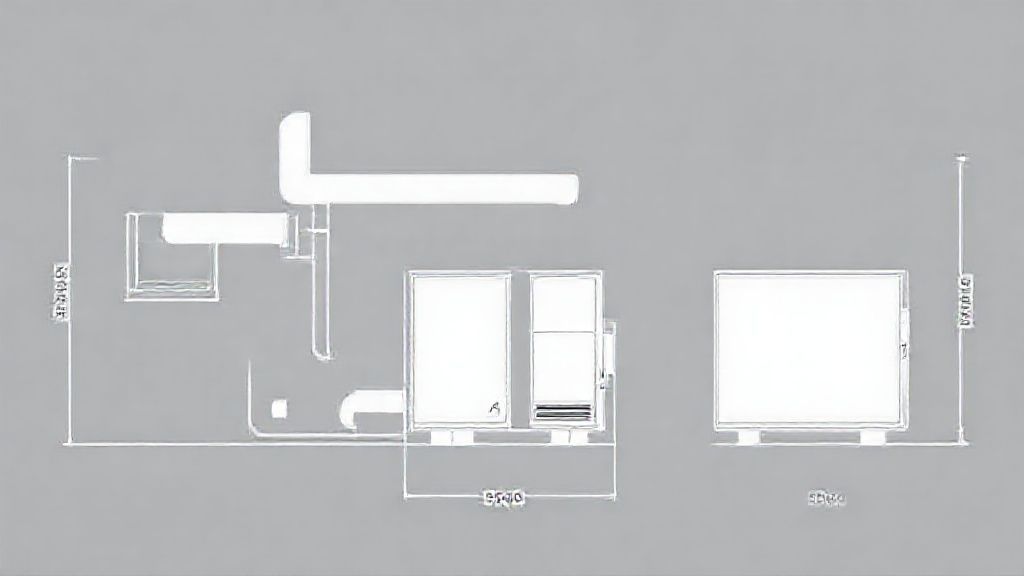
As an HVAC contractor, you understand that precision is paramount. Every measurement matters, especially when dealing with commercial or residential HVAC installations. The T5TTR3042A1000A, a robust Trane packaged unit, exemplifies this need for exactness. Knowing the specific dimensions of any unit is not merely a good practice; it is a fundamental requirement for successful, efficient, and profitable project execution.
When you are sourcing equipment like the T5TTR3042A1000A, ensuring you have the correct specifications is crucial for everything from logistics to final installation. This isn’t just about fitting a unit onto a pad or a rooftop; it involves proper ductwork alignment, clearance for service, and adherence to local codes. For quality air conditioning units that meet these precise requirements, you need a supplier that provides clear, accurate data and reliable equipment.
Key Highlights
- Accurate dimensions are critical for seamless installation and logistical planning.
- The T5TTR3042A1000A is a Trane 3.5-ton packaged HVAC unit, providing both heating and cooling.
- Understanding the model number provides immediate insights into capacity and configuration.
- Proper clearance requirements ensure optimal performance and serviceability.
- Verification of specifications with manufacturer data is always the final step.
Understanding the T5TTR3042A1000A Model
The T5TTR3042A1000A represents a Trane packaged HVAC system, a common and highly effective solution for various applications where space, accessibility, or specific building designs dictate a single-unit approach. Unlike traditional split systems that separate the condensing unit outdoors and the evaporator coil and furnace indoors, packaged units house all major components—compressor, condenser coil, evaporator coil, and heating section—within a single cabinet.
This design makes them particularly suitable for structures with limited attic or crawlspace access, multi-floor homes, or buildings constructed on slab foundations where indoor equipment placement might be challenging. The T5TTR3042A1000A is designed to provide comprehensive heating and cooling from a single footprint, simplifying installation in many scenarios. Its designation as a packaged unit also means it is engineered for whole-home coverage and is compatible with zoning dampers, although performance with zoning may require specific accessories or configurations to optimize airflow and temperature control across different zones.
A significant advantage for contractors is the reduced outdoor noise associated with packaged units compared to split configurations. Because all major operational components are housed together, the sound profile can often be managed more effectively at a single point. This is a selling point for clients concerned about noise levels near patios, windows, or outdoor living areas. Efficiency of any packaged system, including the T5TTR3042A1000A, heavily relies on proper insulation and expertly sealed ductwork. Substandard duct systems can negate the efficiency gains of even the best equipment, leading to callbacks and dissatisfied clients.
Why Precise HVAC Unit Dimensions are Crucial for Installation
When you are planning an HVAC installation, overlooking the exact dimensions of a unit like the T5TTR3042A1000A is a mistake that can cost you time, money, and your reputation. This isn’t just about fitting it onto a roof curb or a ground-level pad. The dimensions influence every stage of your project, from quoting to final commissioning.
Logistics and Site Accessibility
The first point of impact for precise dimensions is logistics. A packaged unit is a single, often bulky, piece of equipment. Knowing its exact height, width, and depth dictates the type of transportation needed. Will it fit on a standard flatbed truck, or does it require specialized hauling? More importantly, can it be moved from the delivery vehicle to the installation site without major structural modifications or obstructions? For rooftop installations, the unit’s dimensions dictate the size of the crane required, the lifting capacity, and the maneuvering space available on the roof itself. Underestimating this can lead to delays, additional crane rental fees, and potentially safety hazards on site.
Foundation and Mounting Considerations
Whether you are placing the T5TTR3042A1000A on a ground-level pad or a rooftop curb, the dimensions directly dictate the necessary footprint. A pad must be sufficiently sized to support the unit and allow for proper drainage and service access. For rooftop installations, the curb must precisely match the unit’s base dimensions to ensure a weather-tight seal and structural integrity. A mismatch here can lead to leaks, compromised efficiency, and the need for expensive, time-consuming field modifications. Retrofitting an existing curb can be particularly challenging if the new unit’s dimensions differ significantly, especially with older ductwork connections that may not align.
Ductwork Integration
Packaged units like the T5TTR3042A1000A connect directly to the building’s ductwork system. The location and size of the supply and return air openings on the unit must align perfectly with the existing or newly fabricated duct runs. If the unit’s dimensions are off, even by an inch, it can necessitate significant ductwork modifications on site. This consumes valuable labor hours, increases material costs, and can introduce potential leakage points if not executed flawlessly. Ensuring proper airflow and static pressure requires these connections to be as smooth and straight as possible, which is only achievable with precise dimensional planning.
Serviceability and Maintenance Access
An often-overlooked aspect of dimensions is future serviceability. HVAC units require regular maintenance and occasional repairs. Knowing the unit’s dimensions and the clearance requirements around it ensures that technicians can easily access all service panels, coils, compressors, and electrical compartments. A unit crammed into a tight space might function, but it becomes a nightmare to service, leading to increased labor times for routine tasks and potential frustration for your service team or the customer.
Compliance with Codes and Regulations
Local building codes and manufacturer specifications often mandate specific clearances around HVAC equipment for safety, fire prevention, and operational efficiency. These clearances are directly tied to the unit’s dimensions. Failing to account for them can lead to inspection failures, requiring costly relocation or re-installation. This is particularly critical in commercial settings or areas with strict zoning laws.
In essence, precise dimensional knowledge of the T5TTR3042A1000A is a cornerstone of professional project management. It prevents costly errors, streamlines the installation process, ensures long-term operational efficiency, and ultimately contributes to your client’s satisfaction and your business’s profitability. For contractors seeking reliable hvac systems, verify every detail before the order is placed and before the truck leaves the yard.
T5TTR3042A1000A Dimensions Height, Width, Depth
While specific, exact manufacturer dimensions for the T5TTR3042A1000A should always be verified directly from the latest Trane product specification sheet, I can provide illustrative dimensions typical for a 3.5-ton packaged HVAC unit of this configuration. These figures are approximations based on common industry standards for units of this capacity and type. Always consult the official Trane documentation for the precise model you are installing, as even minor variations in sub-models or revisions can alter measurements.
Typical Height Considerations
For a 3.5-ton packaged unit, the height can vary significantly based on whether it is a convertible (downflow/horizontal) unit and the presence of any factory-installed accessories or optional base heights. Generally, you can expect the height to be in the range of:
- Typical Height Range: 35 inches to 50 inches.
This measurement includes the main cabinet but usually excludes any necessary roof curb or mounting frame. When planning, consider the overall height once installed on a curb, as this impacts visual aesthetics, potential wind load considerations, and accessibility for maintenance. The height is crucial for determining if a unit will fit under eaves, within specific mechanical enclosures, or if it will be visible from certain vantage points on a rooftop.
Typical Width Considerations
The width of a packaged unit is often influenced by the coil configuration, fan design, and internal component layout. For a 3.5-ton capacity like the T5TTR3042A1000A, the width usually falls within a range that accommodates the condenser and evaporator sections efficiently.
- Typical Width Range: 45 inches to 65 inches.
This dimension is vital for assessing clearance from adjacent walls, other rooftop equipment, or property lines. It also dictates how much lateral space is needed during the lifting and placement process. Ensure that the width allows for adequate service access panels to be opened without obstruction. The width, combined with depth, will determine the footprint of the unit on its mounting surface.
Typical Depth Considerations
The depth of the T5TTR3042A1000A, or any comparable 3.5-ton packaged unit, accounts for the front-to-back extent of the cabinet. This dimension is critical for duct connections and ensuring adequate space for the supply and return air plenums.
- Typical Depth Range: 70 inches to 90 inches.
The depth often includes the section where the fan motor and blower assembly are housed, along with the heating components. For units that are convertible, the ductwork connections may be configured for either bottom (downflow) or side (horizontal) connection. This depth is especially important for ground-level installations where the unit might be placed against a building wall, requiring careful consideration of clearances for both the back and the front where service access and air intake/exhaust might be located.
Important Note on Dimensions
It cannot be stressed enough: these ranges are illustrative. The specific T5TTR3042A1000A model will have exact dimensions published by Trane. Before placing any order or beginning any site preparation, always obtain and review the official submittal sheets or product data for the precise model number. These documents will provide not only the exact dimensions but also detailed information on service clearances, electrical connections, and weight, which are equally critical for a successful installation. As a trusted source for Trane HVAC Systems, we always advocate for meticulous verification.
Weight and Shipping Specifications
Understanding the weight and shipping specifications of the T5TTR3042A1000A is as critical as knowing its physical dimensions. The weight directly impacts handling, transportation, and structural considerations for its installation. Packaged units, housing multiple components, are substantial pieces of equipment that require careful planning.
Unit Weight and Its Implications
For a 3.5-ton packaged HVAC unit, the operating weight can vary, but generally, you’re looking at a range of approximately 450 to 700 pounds. This figure will depend on the specific configuration, materials used by Trane, and whether it includes additional components like a gas heating section or specialized coils. The significant weight has several implications:
- Lifting Equipment: This weight necessitates the use of heavy-duty lifting equipment, primarily cranes for rooftop installations. The crane’s capacity, reach, and setup location must be planned meticulously, taking into account the unit’s weight, the lifting radius, and the presence of other obstructions. Miscalculating this can lead to delays, additional equipment costs, and safety risks.
- Structural Integrity: For rooftop installations, the building’s structural integrity must be assessed to ensure it can safely support the unit’s weight, especially on older buildings. This often requires consultation with structural engineers. Even for ground-level installations, the pad or foundation must be capable of bearing the load without settling or cracking over time.
- Personnel Safety: Moving and positioning a unit of this weight requires a well-trained crew, proper rigging techniques, and strict adherence to safety protocols to prevent accidents and injuries.
Shipping and Packaging Details
The T5TTR3042A1000A will typically be shipped on a sturdy wooden skid or pallet. This packaging is designed to protect the unit during transit and facilitate forklift handling at the warehouse and job site. Key shipping specifications to consider include:
- Shipping Weight: This is generally higher than the net unit weight as it includes the pallet, protective wrapping, and any accessory packaging. Expect the shipping weight to be in the range of 500 to 800 pounds for a 3.5-ton packaged unit.
- Shipping Dimensions: The packaged unit will have slightly larger dimensions than its bare unit dimensions to account for the pallet and protective materials. Ensure you have adequate space for offloading and temporary staging on site.
- Handling Instructions: Always refer to the manufacturer’s shipping and handling instructions. These will specify approved lifting points, rigging methods, and any orientation restrictions during transport and placement. Improper handling can damage internal components, void warranties, and lead to costly repairs.
When you purchase Wholesale AC Units, reliable suppliers will provide clear documentation regarding these weight and shipping specifications. Having this information upfront allows you to plan your logistics, coordinate with crane operators, ensure site readiness, and maintain a safe and efficient workflow. Never guess or assume; always verify the exact figures for your specific model.
Decoding the Model Number T5TTR3042A1000A Explained
Trane model numbers, like those from many manufacturers, are not random sequences of letters and numbers. They are structured codes designed to convey a significant amount of information about the unit’s type, capacity, efficiency, and specific features. Understanding how to decode the T5TTR3042A1000A model number provides immediate insights crucial for contractors.
Breakdown of T5TTR3042A1000A
Let’s dissect this specific model number:
- T5: This typically refers to the product line or series. Trane uses various prefixes to denote different product families, features, or efficiency levels within their packaged unit offerings. The ‘5’ might indicate a particular generation or feature set within Trane’s packaged unit lineup.
- TTR: This is a crucial identifier. In Trane’s nomenclature, “TTR” specifically designates a residential (or light commercial) packaged unit that provides both heating (gas furnace) and cooling. Other combinations might indicate heat pumps (THC, TCH) or cooling-only (TCC) packaged units. The “R” often signifies a multi-positional or convertible unit capable of downflow or horizontal airflow configurations.
- 30: This part often refers to the heating capacity or a specific design iteration, though for tonnage, the following two digits are usually more direct. In some Trane sequences, it can also relate to size in a general series.
- 42: This is arguably the most critical part for sizing. The “42” indicates the unit’s cooling capacity in thousands of BTUs per hour (BTUH). So, 42 represents 42,000 BTUH. To convert this to tonnage, you divide by 12,000 BTUH per ton: 42,000 / 12,000 = 3.5 tons. This immediately tells you that the T5TTR3042A1000A is a 3.5-ton capacity unit. This information is fundamental for proper HVAC Sizing Guide calculations for any given structure.
- A1000A: This final alphanumeric sequence typically provides details about the unit’s specific configuration, efficiency rating, voltage, and various options or revisions.
- A: Often denotes a specific major revision or generation of the unit.
- 1: Could specify the heating input in BTUH, efficiency tier (e.g., 14 SEER), or voltage configuration.
- 00: Might represent specific factory-installed options, such as corrosion protection, disconnects, or different types of coils.
- 0A: Often relates to the voltage (e.g., 208/230V, single-phase, or three-phase options), fan type, or a minor revision code.
Why Decoding Matters for Contractors
Understanding these codes allows you, the contractor, to quickly ascertain the essential characteristics of the unit without needing to consult a full spec sheet every time:
- Capacity Confirmation: The “42” immediately confirms it’s a 3.5-ton unit, allowing you to match it against your load calculations.
- Unit Type: “TTR” tells you it’s a packaged gas/electric unit, confirming its operational mode.
- Quick Reference: This knowledge enables faster quoting, ordering, and field verification. You can quickly cross-reference a unit on a job site with the planned installation.
- Troubleshooting: In the field, understanding the model number can help diagnose issues or identify compatible replacement parts more efficiently.
Always remember that while this decoding provides a strong initial understanding, the full manufacturer’s data sheet remains the definitive source for all specifications, including precise dimensions, electrical requirements, and performance data.
Installation Clearance Requirements and Best Practices
Proper installation clearance around any HVAC unit, especially a packaged system like the T5TTR3042A1000A, is not merely a suggestion. It is a critical component of safety, performance, efficiency, and long-term serviceability. Ignoring these requirements can lead to operational problems, premature equipment failure, and safety hazards. Manufacturers specify clearances for several key reasons, and understanding them is fundamental to being a professional contractor.
Airflow Requirements
The T5TTR3042A1000A relies on unrestricted airflow for both its condenser coil (outdoor section) and its combustion air intake and exhaust (for the gas furnace section). Blocking this airflow will significantly impede the unit’s ability to dissipate heat (cooling cycle) or draw in fresh air for combustion, leading to reduced efficiency, increased energy consumption, and potential equipment damage. Reduced airflow causes the compressor to work harder, leading to higher head pressures and possible premature failure. For gas units, insufficient combustion air can lead to incomplete combustion and the production of dangerous carbon monoxide.
- Condenser Airflow: Maintain clear space around the sides and top of the unit where the condenser coil is located. Manufacturer specifications typically call for 12 to 24 inches of clearance from walls, fences, or other obstructions. Overhanging structures can also impede exhaust airflow, so adequate vertical clearance is often specified.
- Combustion Air: Ensure the area around the combustion air intake is clear of debris, snow, or anything that could block the flow. This is particularly important for packaged units that incorporate a gas furnace.
Service and Maintenance Access
All major components of an HVAC unit eventually require service, whether it’s routine cleaning, filter changes (if applicable to the unit design, not discussing air filters here), or component replacement. Adequate clearance around service panels ensures that technicians can perform these tasks safely and efficiently. Units that are difficult to access result in longer service calls, increased labor costs, and can deter proper preventative maintenance.
- Access Panels: Most manufacturers specify at least 24 to 36 inches of clearance on the side(s) containing the main access panels (for electrical, compressor, controls, blower, and furnace sections).
- Coil Cleaning: Sufficient space is needed to safely clean the condenser and evaporator coils.
- Component Removal: If a major component like a compressor or blower motor needs replacement, enough room must be available for removal and installation without damaging the unit or adjacent structures.
Proximity to Structures and Flammable Materials
The T5TTR3042A1000A, especially with a gas furnace, generates heat and has electrical components. Therefore, maintaining safe distances from combustible materials and building structures is critical for fire safety and code compliance.
- Combustible Materials: A minimum clearance, often 6 inches or more, is required from the sides and top of the unit to any combustible construction. Always verify the exact distances specified in the installation manual.
- Windows and Doors: While not a direct fire hazard, placing units too close to windows can allow operational noise to enter the building, leading to tenant complaints. Similarly, units should not block emergency exits or primary pathways.
Ductwork Connections
As mentioned previously, the T5TTR3042A1000A connects directly to ductwork. The space around these connections needs to accommodate plenums, transitions, and proper sealing without crimping or creating undue resistance to airflow. Proper planning for Installation Accessories and duct transitions is essential here.
Ground-Level vs. Rooftop Installation Best Practices
The type of installation dictates additional considerations:
- Ground Level:
- Slab: The unit should be placed on a level, solid concrete slab that extends beyond the unit’s perimeter by at least a few inches on all sides. The slab should also be elevated sufficiently (e.g., 4-6 inches) to prevent water pooling around the base and to protect against snow accumulation, pests, and lawn maintenance equipment.
- Drainage: Ensure the area around the unit has good drainage to prevent water from collecting.
- Security: Consider protection from accidental damage (e.g., from vehicles or lawnmowers) and potential vandalism.
- Rooftop:
- Roof Curb: A precisely sized and installed roof curb is mandatory. It must match the unit’s base dimensions and be securely fastened and sealed to the roof deck to prevent leaks. The curb also provides the structural support for the ductwork connections.
- Wind Loads: Rooftop units are exposed to wind. Ensure the unit is securely bolted to the curb as per manufacturer guidelines and local wind load requirements.
- Condensate Drainage: Proper condensate drainage from the evaporator coil must be established, often routed through the roof curb and connected to the building’s drainage system.
- Vibration Isolation: Consider vibration isolators between the unit and the curb to minimize noise transmission into the building.
Always review the specific installation manual for the T5TTR3042A1000A before starting any work. Adhering to these guidelines ensures not only a compliant and safe installation but also maximizes the lifespan and efficiency of the HVAC system, providing reliable performance for your clients.
Related Technical Specifications BTU, SEER, Volts
Beyond physical dimensions, the technical specifications of the T5TTR3042A1000A are fundamental to understanding its performance, energy consumption, and compatibility with a building’s electrical system. For contractors, these numbers dictate equipment selection, operational costs, and overall system effectiveness.
Cooling Capacity BTU
As decoded from the model number, the “42” signifies a cooling capacity of 42,000 BTUs per hour (BTUH). This translates directly to a 3.5-ton unit (42,000 BTUH / 12,000 BTUH per ton). This capacity is the primary determinant of whether the unit can effectively cool a given space. Proper HVAC Sizing Guide calculations, based on factors like square footage, insulation levels, window types, local climate, and internal heat gains, are essential to ensure the 3.5-ton capacity is appropriate. An undersized unit will struggle to maintain comfort, while an oversized unit will short-cycle, leading to poor humidity control, increased wear and tear, and often higher energy costs.
Heating Capacity BTU
Since the T5TTR3042A1000A is a packaged gas/electric unit (indicated by TTR), it also has a heating capacity, typically measured in BTUH input and output for its gas furnace section. The heating capacity can vary significantly between models even with the same cooling tonnage. For example, a 3.5-ton cooling unit might be paired with a 70,000, 80,000, or 90,000 BTUH furnace. This number dictates how effectively the unit can heat the conditioned space in colder weather. Again, load calculations are paramount. The efficiency of the heating section is measured by its Annual Fuel Utilization Efficiency (AFUE) rating, indicating how efficiently it converts fuel (natural gas or propane) into usable heat. Higher AFUE ratings mean lower operating costs for heating.
SEER and SEER2 Ratings
SEER (Seasonal Energy Efficiency Ratio) and its successor, SEER2, are critical metrics for the cooling efficiency of the T5TTR3042A1000A. A higher SEER or SEER2 rating indicates greater energy efficiency, meaning the unit consumes less electricity to provide the same amount of cooling over a typical cooling season. As of January 1, 2023, the Department of Energy (DOE) introduced new testing procedures and standards, resulting in the SEER2 rating system. For units like the T5TTR3042A1000A, a common SEER2 rating might be 13.4, 14.3, or even higher, depending on the specific configuration and components. These ratings directly impact the homeowner’s or business owner’s utility bills and can qualify for various rebates or incentives. Always confirm the exact SEER2 rating of the specific model for accurate energy cost projections and compliance with regional energy standards.
Electrical Requirements Volts, Amps, Phase
The electrical specifications are non-negotiable. The T5TTR3042A1000A will require a specific voltage, amperage, and phase configuration. Most residential and light commercial packaged units operate on:
- Voltage: 208/230 Volts (V) is standard for many HVAC applications. Some larger commercial units may require 460V.
- Phase: Single-phase (1&PH;) is typical for residential and smaller commercial applications. Larger commercial and industrial settings often use three-phase (3&PH;) power. Confirming the correct phase is crucial, as a 3-phase unit cannot operate on a single-phase supply and vice-versa.
- Minimum Circuit Amps (MCA) and Maximum Overcurrent Protection (MOCP): These values dictate the minimum wire gauge and the maximum breaker size required for the unit’s electrical circuit. Adhering to these specifications is vital for electrical safety and preventing circuit overloads.
Incorrect electrical hookup can result in severe damage to the unit, electrical fires, and safety hazards. Always consult the wiring diagram and electrical data on the unit’s nameplate and in the installation manual. A licensed electrician must perform all electrical connections, ensuring compliance with local and national electrical codes.
By understanding these technical specifications for the T5TTR3042A1000A, you can confidently select the right equipment, accurately estimate operating costs, and ensure a safe, efficient, and code-compliant installation for your clients.
Finding the Right Fit Why AC Direct VIP is Your Go-To Source
For HVAC contractors, reliability, accuracy, and efficiency are not just buzzwords; they are the bedrock of a successful business. When you are specifying and sourcing equipment like the Trane T5TTR3042A1000A, you need a partner who understands these priorities. This is where AC Direct VIP steps in as your go-to source, offering more than just units off a shelf. We provide the support and resources necessary to ensure your projects run smoothly from conception to completion.
Accurate Specifications and Documentation
One of the primary benefits of working with AC Direct VIP is our commitment to providing precise, up-to-date specifications for all the equipment we offer. As highlighted throughout this discussion, dimensions, weight, and technical data for units like the T5TTR3042A1000A are non-negotiable. We understand that access to comprehensive, verifiable manufacturer documentation is crucial for your planning, quoting, and installation processes. You won’t find yourself guessing or making assumptions when you work with us; we ensure you have the correct data at your fingertips.
Quality Equipment from Reputable Brands
We specialize in offering wholesale AC units and hvac systems from leading manufacturers, including Trane HVAC Systems. This means you are consistently getting quality, reliable equipment that meets industry standards and manufacturer warranties. Supplying your clients with dependable units reduces callbacks, enhances customer satisfaction, and builds your reputation as a contractor who delivers excellence. We focus on units that offer a strong balance of efficiency, durability, and performance, ensuring you can confidently stand behind your installations.
Streamlined Sourcing and Support
Your time is valuable. Our platform is designed to make the sourcing process as efficient as possible. From easy navigation to clear product listings, we aim to simplify your procurement efforts. Beyond just selling units, we offer expertise and support that helps you make informed decisions. Whether you need clarification on a specific model’s features, guidance on compatibility, or insights into optimal application, our team is here to assist. We understand the challenges you face in the field, and our goal is to be a resource that genuinely contributes to your operational success.
Comprehensive Range of Products
In addition to packaged units, we offer a wide array of HVAC products, including AC Condenser Units, evaporator coils, furnaces, heat pumps, and a variety of Installation Accessories. This comprehensive selection means you can consolidate your purchasing, knowing that you can find virtually everything you need for your HVAC projects in one reliable place. This not only saves you time but also ensures compatibility across different components, leading to more integrated and efficient system installations.
At AC Direct VIP, we are more than just a supplier; we are a partner dedicated to supporting HVAC contractors. We understand the intricacies of your business and strive to provide the tools, information, and products that help you thrive. When it comes to finding the right fit for your projects, from precise dimensions to reliable performance, trust us to be your consistent and dependable resource.
Frequently Asked Questions
What type of HVAC system is the Trane T5TTR3042A1000A?
The T5TTR3042A1000A is a Trane packaged HVAC system. This means it combines all major components—compressor, condenser, evaporator, and a gas furnace—into a single outdoor cabinet. Packaged units are ideal for installations where indoor space is limited, such as multi-floor homes, slab foundations, or commercial buildings with rooftop placement.
Why are exact dimensions so important for this unit?
Exact dimensions are crucial for several reasons. They dictate the unit’s fit on a specific slab or roof curb, impact logistical planning for transportation and lifting (e.g., crane sizing), ensure proper alignment with ductwork connections, and guarantee adequate clearance for airflow, safety, and future serviceability. Inaccurate measurements can lead to costly modifications, delays, and compromised performance.
Does the T5TTR3042A1000A support zoning?
Yes, packaged units like the T5TTR3042A1000A are compatible with zoning dampers. However, achieving optimal zoning performance often requires additional components or specific configurations to manage airflow and temperature control effectively across different zones within a building. Always consult the manufacturer’s guidelines and specific zoning control system requirements.
What does the “42” in the T5TTR3042A1000A model number signify?
The “42” in the model number T5TTR3042A1000A indicates the unit’s cooling capacity in thousands of BTUs per hour (BTUH). Specifically, 42,000 BTUH, which translates to a 3.5-ton cooling capacity. This numerical designation is critical for properly sizing the unit to the heating and cooling load of a structure.
Are packaged units generally louder than split systems?
Packaged units like the T5TTR3042A1000A often have reduced outdoor noise levels compared to traditional split systems. Because all operational components are contained within a single cabinet, the sound is generated from a singular point and can be more effectively managed. This can be an advantage for installations where outdoor noise is a concern near windows, patios, or property lines.
Final Thoughts
For any HVAC contractor, the details matter. When you are dealing with a significant piece of equipment like the Trane T5TTR3042A1000A packaged unit, comprehensive knowledge of its dimensions, weight, and technical specifications is not optional; it is essential for your efficiency, profitability, and reputation. From selecting the right lifting equipment to ensuring perfect ductwork alignment and providing adequate service access, every measurement and specification plays a critical role in the success of your project.
I cannot overstate the importance of always consulting the most current manufacturer’s specification sheets for the exact model you are installing. While the information provided here gives you a robust understanding of what to expect and what to look for, the official documentation remains your ultimate source of truth. By combining this meticulous attention to detail with reliable equipment from trusted suppliers like AC Direct VIP, you can confidently deliver superior HVAC solutions to your clients, every single time.